Schwarzenegger to speak at Bohemian Club conclave
 PD FILE, 2009The entrance to the Bohemian Grove in 2009.
Published: Wednesday, July 28, 2010 at 6:19 p.m.
Last Modified: Wednesday, July 28, 2010 at 6:19 p.m.AC = 1234Gov. Arnold Schwarzenegger is scheduled to address a throng of rich and powerful men on Friday under the towering redwoods at the Bohemian Grove as the annual encampment along the Russian River in Monte Rio enters its final weekend.
-->
No one other than Bohemian Club members and their guests will hear the governor's speech, which is — like everything that transpires during the 17-day midsummer enclave — done in absolute privacy.
Plutocrats and powerbrokers, including former presidents, annually flock to the 2,700-acre wooded retreat where neither women, other than grove employees, nor outsiders of either gender are permitted.
“It's a private gentleman's club,” club spokesman Sam Singer said. “People are coming to get away from the duties of daily life. They don't desire to be on the front page of The Press Democrat or The New York Times.
“In real life, they get there often enough,” he said.
The club has about 2,000 members.
Mixing their revelry and weird rituals with serious issues, the Bohemians hear from a series of speakers, this year including media mogul Rupert Murdoch, who discussed “the future of news” and former secretaries of state George Shultz and James Baker on international relations and terrorism threats.
The speakers list, including ex-President George H. W. Bush in 1995 and not-yet President Richard Nixon in 1967, remains a well-guarded secret.
But on Thursday night, the club's more artistically inclined members will go public, staging the 99th annual Monte Rio Variety Show at the river community's amphitheater, a fundraiser for three Monte Rio organizations.
The show and barbecue are open to the public and expected to beat last year's record of more than $32,000 in proceeds, divided equally among the Monte Rio Fire Services Foundation, Monte Rio Elementary School Foundation and St. Catherine of Siena Catholic Church.
“It's huge,” said Michele McDonell, a show coordinator and church member, referring to the show's $10,000 boost to her congregation.
A sellout is expected, but tickets may be available by telephone through Wednesday night at 865-2234.
The entertainment lineup is not disclosed ahead of time, but the Bohemians “always guarantee a good show,” McDonell said.
Headliners last summer included country music singers Clint Black and Zac Brown, while Bob Weir and the Steve Miller Band have performed in the past.
Thursday, July 29, 2010
Schwarzenegger to speak at Bohemian Club conclave | PressDemocrat.com

Personal Health - What Do You Lack? Probably Vitamin D - NYTimes.com
Personal Health
What Do You Lack? Probably Vitamin D
By JANE E. BRODY
Published: July 26, 2010
Vitamin D promises to be the most talked-about and written-about supplement of the decade. While studies continue to refine optimal blood levels and recommended dietary amounts, the fact remains that a huge part of the population — from robust newborns to the frail elderly, and many others in between — are deficient in this essential nutrient.

Tony Cenicola/The New York Times
Related
Health Guide: Vitamin D
More Personal Health Columns
If the findings of existing clinical trials hold up in future research, the potential consequences of this deficiency are likely to go far beyond inadequate bone development and excessive bone loss that can result in falls and fractures. Every tissue in the body, including the brain, heart, muscles and immune system, has receptors for vitamin D, meaning that this nutrient is needed at proper levels for these tissues to function well.
Studies indicate that the effects of a vitamin D deficiency include an elevated risk of developing (and dying from) cancers of the colon, breast and prostate; high blood pressure and cardiovascular disease; osteoarthritis; and immune-system abnormalities that can result in infections and autoimmune disorders like multiple sclerosis, Type 1 diabetes and rheumatoid arthritis.
Most people in the modern world have lifestyles that prevent them from acquiring the levels of vitamin D that evolution intended us to have. The sun’s ultraviolet-B rays absorbed through the skin are the body’s main source of this nutrient. Early humans evolved near the equator, where sun exposure is intense year round, and minimally clothed people spent most of the day outdoors.
“As a species, we do not get as much sun exposure as we used to, and dietary sources of vitamin D are minimal,” Dr. Edward Giovannucci, nutrition researcher at the Harvard School of Public Health, wrote in The Archives of Internal Medicine. Previtamin D forms in sun-exposed skin, and 10 to 15 percent of the previtamin is immediately converted to vitamin D, the form found in supplements. Vitamin D, in turn, is changed in the liver to 25-hydroxyvitamin D, the main circulating form. Finally, the kidneys convert 25-hydroxyvitamin D into the nutrient’s biologically active form, 1,25-dihydroxyvitamin D, also known as vitamin D hormone.
A person’s vitamin D level is measured in the blood as 25-hydroxyvitamin D, considered the best indicator of sufficiency. A recent study showed that maximum bone density is achieved when the blood serum level of 25-hydroxyvitamin D reaches 40 nanograms per milliliter or more.
“Throughout most of human evolution,” Dr. Giovannucci wrote, “when the vitamin D system was developing, the ‘natural’ level of 25-hydroxyvitamin D was probably around 50 nanograms per milliliter or higher. In modern societies, few people attain such high levels.”
A Common Deficiency
Although more foods today are supplemented with vitamin D, experts say it is rarely possible to consume adequate amounts through foods. The main dietary sources are wild-caught oily fish (salmon, mackerel, bluefish, and canned tuna) and fortified milk and baby formula, cereal and orange juice.
People in colder regions form their year’s supply of natural vitamin D in summer, when ultraviolet-B rays are most direct. But the less sun exposure, the darker a person’s skin and the more sunscreen used, the less previtamin D is formed and the lower the serum levels of the vitamin. People who are sun-phobic, babies who are exclusively breast-fed, the elderly and those living in nursing homes are particularly at risk of a serious vitamin D deficiency.
Dr. Michael Holick of Boston University, a leading expert on vitamin D and author of “The Vitamin D Solution” (Hudson Street Press, 2010), said in an interview, “We want everyone to be above 30 nanograms per milliliter, but currently in the United States, Caucasians average 18 to 22 nanograms and African-Americans average 13 to 15 nanograms.” African-American women are 10 times as likely to have levels at or below 15 nanograms as white women, the third National Health and Nutrition Examination Survey found.
Such low levels could account for the high incidence of several chronic diseases in this country, Dr. Holick maintains. For example, he said, in the Northeast, where sun exposure is reduced and vitamin D levels consequently are lower, cancer rates are higher than in the South. Likewise, rates of high blood pressure, heart disease, and prostate cancer are higher among dark-skinned Americans than among whites.
The rising incidence of Type 1 diabetes may be due, in part, to the current practice of protecting the young from sun exposure. When newborn infants in Finland were given 2,000 international units a day, Type 1 diabetes fell by 88 percent, Dr. Holick said.
The current recommended intake of vitamin D, established by the Institute of Medicine, is 200 I.U. a day from birth to age 50 (including pregnant women); 400 for adults aged 50 to 70; and 600 for those older than 70. While a revision upward of these amounts is in the works, most experts expect it will err on the low side. Dr. Holick, among others, recommends a daily supplement of 1,000 to 2,000 units for all sun-deprived individuals, pregnant and lactating women, and adults older than 50. The American Academy of Pediatrics recommends that breast-fed infants receive a daily supplement of 400 units until they are weaned and consuming a quart or more each day of fortified milk or formula.
Given appropriate sun exposure in summer, it is possible to meet the body’s yearlong need for vitamin D. But so many factors influence the rate of vitamin D formation in skin that it is difficult to establish a universal public health recommendation. Asked for a general recommendation, Dr. Holick suggests going outside in summer unprotected by sunscreen (except for the face, which should always be protected) wearing minimal clothing from 10 a.m. to 3 p.m. two or three times a week for 5 to 10 minutes.
Slathering skin with sunscreen with an SPF of 30 will reduce exposure to ultraviolet-B rays by 95 to 98 percent. But if you make enough vitamin D in your skin in summer, it can meet the body’s needs for the rest of the year, Dr. Holick said.
Can You Get Too Much?
If acquired naturally through skin, the body’s supply of vitamin D has a built-in cutoff. When enough is made, further exposure to sunlight will destroy any excess. Not so when the source is an ingested supplement, which goes directly to the liver.
Symptoms of vitamin D toxicity include nausea, vomiting, poor appetite, constipation, weakness and weight loss, as well as dangerous amounts of calcium that can result in kidney stones, confusion and abnormal heart rhythms.
But both Dr. Giovannucci and Dr. Holick say it is very hard to reach such toxic levels. Healthy adults have taken 10,000 I.U. a day for six months or longer with no adverse effects. People with a serious vitamin D deficiency are often prescribed weekly doses of 50,000 units until the problem is corrected. To minimize the risk of any long-term toxicity, these experts recommend that adults take a daily supplement of 1,000 to 2,000 units.
This article has been revised to reflect the following correction:
Correction: July 29, 2010
The Personal Health column on Tuesday, about the deficiency of vitamin D in much of the population, referred imprecisely to the publisher of a book by Dr. Michael Holick of Boston University, who said low levels of the vitamin could be contributing to high rates of some chronic diseases. While Penguin did not publish Dr. Holick’s book, “The Vitamin D Solution,” it owns the imprint that did, Hudson Street Press.

Marchwood company building dinghies out of waste material (From This is Hampshire)
Marchwood company building dinghies out of waste material
8:50am Wednesday 28th July 2010
BUSINESS is buoyant for a boat builder from Hampshire after it floated the idea of building dinghies out of its waste.
Bosses at Marchwood based Composite Mouldings Limited (CML), which specialises in building advanced hulls for companies like Pearl Motor Yachts and for the Ministry of Defence, got fed-up with a tottering pile of waste and off-cuts in the workshop.
After consulting their 25 staff for ideas on what to build, they decided to turn it into a new range of dinghy hulls, which they’ve been selling off at boat jumbles for £100 a time. Tommi Buckley, pictured, project manager for CML, said: “We build boats up to 60ft long and there’s a lot of waste – about 15 per cent. So we had a pile of off-cuts and it was overflowing.
“Traditionally we have put it in a bin and we have had to pay someone to take it away and we’re reluctant to do that. So, the solution was to make something out of it.
“Because they are quite small that 15 per cent waste from a 60 foot boat will make several dinghies. We have made 12 dinghies so far and it’s working well.
“We get the apprentice to make them and we sell them for £100. People can then fit them out with rowlocks and a seat for another £50.
“Previously we would have just written the material costs off.”
Business-Plan-Presentation---What-do-Investors-Want-to-See?
Business Plan Presentation - What do Investors Want to See? Created On: 9/16/2009 - in Business Plan Tips - Comments (1) A business plan serves as a guide for your successful business launch and operation and helps you to generate capital. It shows investors and lenders that the owner has all the capabilities to run the business and they can invest in your business without hesitation.
Business plan is a road map to success. Business plan is different from product plan. It must contain a detail description of your company, why you want to start this business; your market analysis, competition, etc., while a product plan only contains description about your product and services.
After developing a business plan, you have to present it to potential investors. It is necessary that your business plan presentation must be that powerful that it will encourage numerous investors to provide you capital. Business plan presentation is a brief description of your entire business plan. For creating a knockout presentation, it is required to keep it short and simple; so, avoid adding irrelevant material.
Some points that investors want to look for in a business plan presentation are: Uniqueness of a company or project, Benefits derived from a capital infusion, how will the company succeed and attain profitability, is management capable of implementing the business plan, are financial projections realistic, and is there an exit strategy for the investor. For a successful presentation and to attract large number of investors, it is essential to include all these points in your business plan PowerPoint presentation.
How to attract angle investors by making PowerPoint presentation?
A solid business plan presentation: Your business plan presentation must be complete, convincing and simple. Angle investors want to see whether you are capable enough of running business successfully and will it yield for them profit on their investment. Add all the relevant details that your angle investors want to know.
A good reason to invest: There are many categories of investors and every category has their own reasons to invest in your organization. It is necessary that you create business plan presentation, which will attract all types of investors. Give them a powerful reason to invest in your business.
A solid management team: You can attract angle investors by hiring a solid management team, who has the potential to take your business to the next level. They must have positive attitude, knowledge and skills to attract large number of audiences towards them.
Wednesday, July 28, 2010
ETF investing - Money Matters | Moneyweb
Money Matters
ETF investing

-->
Warren Ingram answers your questions on which to use and how to invest in these products?
JOHANNESBURG - I received many e-mails after my last article requesting more information about exchange traded funds (ETFs). Most of the people were asking for recommendations about which ETFs to use and how to invest in these products.
THE QUESTIONS
These are two of the questions that were sent to me asking for information and product recommendations about ETFs.
"Hi Warren,
I've just read your article on Moneyweb this morning about saving titled "make your first million".
I have 40k that I would like to put away, and don't need to touch for a long time. I am still young and have a long horizon. What is the best way to get into ETFs without having to pay annual management fees through a broker? and also which ETF would you recommend, a Satrix and if so which one?
Thank you
Giorgio""Good day Warren
I have read your article of making a million and enjoyed it. Please explain what is an ETF investment, please give an example eg, a name of a company.
Regards
Denis"
DISCLAIMER
It is important to note that I am an avid fan of ETFs and have structured solutions in our financial planning business to take advantage of their benefits. This is relevant because you need to know where my preference lies before you read the rest of this article. Having said that, I have no commercial interest in any of the products I am going to recommend in this article. I usually avoid promoting a specific fund or product. However, so many people have been asking for recommendations that I feel it is necessary in this instance. If you invest in any of the ETFs that I recommend, you will know that I will not derive any financial benefit.What is an ETF
An exchange traded fund (ETF) is an investment that allows you to buy a number of different shares or other investments on the stock exchange. ETFs are attractive investments because you get access to a number of different investments (securities) for the cost of a single investment. ETFs usually track a specific stock market index like the Top 40. Well constructed ETFs can be very low-cost investments that can be bought via a stockbroker or directly like a unit trust. The legal structure of ETFs in South Africa is a unit trust, so you get all the regulatory protection offered by unit trusts at the lowest possible cost. The other benefit of ETFs is that they are largely passive investments; that means they don't change at the discretion of a fund manager. The index based ETFs only change when the actual index changes which limits the transaction costs of the investment. In order to understand why ETFs are so good, you need to know why I prefer investing in an index rather than an actively managed fund.Why an index
According to research by Daniel R Wessels from www.indexinvestor.co.za, more than 60% of all unit trusts that invest in shares (equity funds) have not beaten the stock market (All Share Index) over any reasonable period to March 2010. As you can see from the table below, over five years only 17% of all equity funds managed to beat the stock market. If history were to repeat itself over the next five years, you have an 83% chance of underperforming the stock market if you invest in an actively managed fund.Table A: Equity unit trusts vs the All Share Index to March 2010
Equity Funds
1-year
5-year
10-year
Best performing fund
59.7%
23.4%
27.0%
Worst performing fund
24.2%
11.4%
9.9%
Average
42.3%
17.2%
17.1%
Benchmark: ALSI
44.1%
19.9%
17.5%
% Funds beating ALSI
38%
17%
38%
Source Daniel R Wessels, www.indexinvestor.co.za
If you are able to select the best performing actively managed equity unit trust (one that tries to beat the market) you can benefit from fantastic returns. Over ten years, the top performing unit trust beat the market by 10% per year which is astounding performance. That shows there are fund managers who can beat the market over long periods of time. Unfortunately, the odds of selecting the right fund are heavily stacked against you. History tells us that you have more than a 60% chance of being wrong if you try to choose an active manager over a ten year period. That is why index investing is so popular around the world, you can eliminate the risks of poor decisions by fund managers and keep your investment costs down. Investment costs are one of the main reasons why active funds cannot beat the market - high costs destroy returns.
Which ETFS
If you are starting an investment portfolio, it makes sense to select a broad based ETF that invests in a wide range of shares. That means you should look at something like a Top 40 or Swix 40 ETF for your core holding. In my view, the two best Top 40 ETFs are offered by Satrix and BIPS. My reasoning is simple, they offer the lowest cost products which is the most important consideration when choosing between ETF providers.Your core ETF should constitute at least 50% of your overall portfolio. Once you have built up some assets in your core ETF and would like to diversify, you should look at the Divi 30 or Rafi 40 ETFs. At present there is only one Divi fund and it is offered by Satrix. There are two Rafi providers however I prefer the Satrix option as I think the other Rafi providers are simply too expensive.
For most investors, a combination of a Top 40 plus a Rafi or Divi should be sufficient to create a great investment portfolio. However, there are some investors who want to take specific bets on individual sectors eg, financial, mining or industrial. There are a number of sector specific ETFs in the market but I would not consider these unless you are prepared to do more of your own homework. The specialist ETFs require more regular monitoring and may need to be traded more frequently. You can get all the information you need on ETFs from www.etfsa.co.za where they supply detailed information on all the ETFs in the market. This is a great starting point for any ETF investor because you can also start your investment with them.
*Warren Ingram, CFP®, has been advising people about their money management since 1996. He is a director of Galileo Capital, www.galileocapital.co.za.
Are there specific Money Matters you would like Warren Ingram to cover? Write to him atWarren@galileocapital.co.za


Collecting rainwater now illegal in many states as Big Government claims ownership over our water
Collecting rainwater now illegal in many states as Big Government claims ownership over our water
by Mike Adams, the Health Ranger, NaturalNews Editor(NaturalNews) Many of the freedoms we enjoy here in the U.S. are quickly eroding as the nation transforms from the land of the free into the land of the enslaved, but what I'm about to share with you takes the assault on our freedoms to a whole new level. You may not be aware of this, but many Western states, including Utah, Washington and Colorado, have long outlawed individuals from collecting rainwater on their own properties because, according to officials, that rain belongs to someone else.
As bizarre as it sounds, laws restricting property owners from "diverting" water that falls on their own homes and land have been on the books for quite some time in many Western states. Only recently, as droughts and renewed interest in water conservation methods have become more common, have individuals and business owners started butting heads with law enforcement over the practice of collecting rainwater for personal use.
Check out this YouTube video of a news report out of Salt Lake City, Utah, about the issue. It's illegal in Utah to divert rainwater without a valid water right, and Mark Miller of Mark Miller Toyota, found this out the hard way.
After constructing a large rainwater collection system at his new dealership to use for washing new cars, Miller found out that the project was actually an "unlawful diversion of rainwater." Even though it makes logical conservation sense to collect rainwater for this type of use since rain is scarce in Utah, it's still considered a violation of water rights which apparently belong exclusively to Utah's various government bodies.
"Utah's the second driest state in the nation. Our laws probably ought to catch up with that," explained Miller in response to the state's ridiculous rainwater collection ban.
Salt Lake City officials worked out a compromise with Miller and are now permitting him to use "their" rainwater, but the fact that individuals like Miller don't actually own the rainwater that falls on their property is a true indicator of what little freedom we actually have here in the U.S. (Access to the rainwater that falls on your own property seems to be a basic right, wouldn't you agree?)
Outlawing rainwater collection in other states
Utah isn't the only state with rainwater collection bans, either. Colorado and Washington also have rainwater collection restrictions that limit the free use of rainwater, but these restrictions vary among different areas of the states and legislators have passed some laws to help ease the restrictions.In Colorado, two new laws were recently passed that exempt certain small-scale rainwater collection systems, like the kind people might install on their homes, from collection restrictions.
Prior to the passage of these laws, Douglas County, Colorado, conducted a study on how rainwater collection affects aquifer and groundwater supplies. The study revealed that letting people collect rainwater on their properties actually reduces demand from water facilities and improves conservation.
Personally, I don't think a study was even necessary to come to this obvious conclusion. It doesn't take a rocket scientist to figure out that using rainwater instead of tap water is a smart and useful way to conserve this valuable resource, especially in areas like the West where drought is a major concern.
Additionally, the study revealed that only about three percent of Douglas County's precipitation ended up in the streams and rivers that are supposedly being robbed from by rainwater collectors. The other 97 percent either evaporated or seeped into the ground to be used by plants.
This hints at why bureaucrats can't really use the argument that collecting rainwater prevents that water from getting to where it was intended to go. So little of it actually makes it to the final destination that virtually every household could collect many rain barrels worth of rainwater and it would have practically no effect on the amount that ends up in streams and rivers.
It's all about control, really
As long as people remain unaware and uninformed about important issues, the government will continue to chip away at the freedoms we enjoy. The only reason these water restrictions are finally starting to change for the better is because people started to notice and they worked to do something to reverse the law.Even though these laws restricting water collection have been on the books for more than 100 years in some cases, they're slowly being reversed thanks to efforts by citizens who have decided that enough is enough.
Because if we can't even freely collect the rain that falls all around us, then what, exactly, can we freely do? The rainwater issue highlights a serious overall problem in America today: diminishing freedom and increased government control.
Today, we've basically been reprogrammed to think that we need permission from the government to exercise our inalienable rights, when in fact the government is supposed to derive its power from us. The American Republic was designed so that government would serve the People to protect and uphold freedom and liberty. But increasingly, our own government is restricting people from their rights to engage in commonsense, fundamental actions such as collecting rainwater or buying raw milk from the farmer next door.
Today, we are living under a government that has slowly siphoned off our freedoms, only to occasionally grant us back a few limited ones under the pretense that they're doing us a benevolent favor.
Fight back against enslavement
As long as people believe their rights stem from the government (and not the other way around), they will always be enslaved. And whatever rights and freedoms we think we still have will be quickly eroded by a system of bureaucratic power that seeks only to expand its control.Because the same argument that's now being used to restrict rainwater collection could, of course, be used to declare that you have no right to the air you breathe, either. After all, governments could declare that air to be somebody else's air, and then they could charge you an "air tax" or an "air royalty" and demand you pay money for every breath that keeps you alive.
Think it couldn't happen? Just give it time. The government already claims it owns your land and house, effectively. If you really think you own your home, just stop paying property taxes and see how long you still "own" it. Your county or city will seize it and then sell it to pay off your "tax debt." That proves who really owns it in the first place... and it's not you!
How about the question of who owns your body? According to the U.S. Patent & Trademark office, U.S. corporations and universities already own 20% of your genetic code. Your own body, they claim, is partially the property of someone else.
So if they own your land, your water and your body, how long before they claim to own your air, your mind and even your soul?
Unless we stand up against this tyranny, it will creep upon us, day after day, until we find ourselves totally enslaved by a world of corporate-government collusion where everything of value is owned by powerful corporations -- all enforced at gunpoint by local law enforcement.{SubscribeHealthRangerBlock}
Tuesday, July 27, 2010
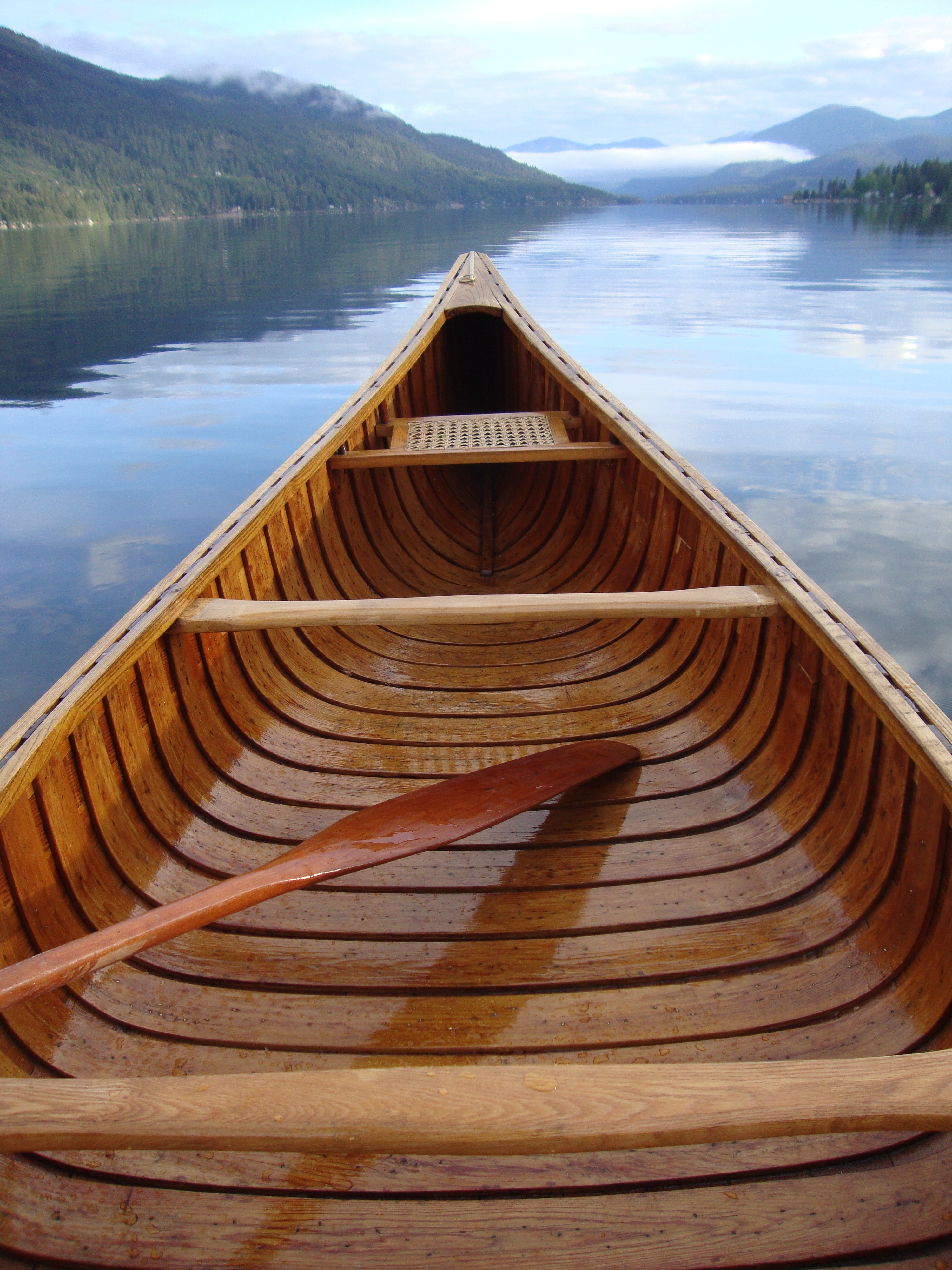
Does a Wood-Canvas Canoe Need a Keel? « Canoeguy’s Blog
Does a Wood-Canvas Canoe Need a Keel?
July 26, 2010
Rate ThisIf there is an area of controversy in the world of wood-canvas canoes, the question of the keel would be it.
Historically, canoes (and kayaks for that matter) never had keels. Edwin Tappen Adney documented hundreds of indigenous water craft throughout North America in the early part of the 1900’s. His meticulous notes, drawings and scale models are presented in the book “Bark Canoes and Skin Boats of North America”. It was compiled and edited by Howard Chappelle after Adney’s death. The canoes and skin boats range from small hunting boats around 11’ in length to large cargo vessels over 36’ long. None of these vessels were built with a keel.
As people of European ancestry came in contact with canoes through the 1800’s and tried to build them, they tended to approach the task of boat building from a European perspective. For them, the process of boat building begins with a keel. The rest of the vessel is built around that. So, some early canoe builders added a keel to the vessel. As canoes became a commodity for the general public in the early 1900’s, canoe builders had to appeal to a market that viewed a canoe as just another kind of boat. The general public of the time tended to distrust a boat that lacked a keel. Many people unfamiliar with canoes felt unstable in them and had trouble travelling in a straight line. As a result, most canoes sold in the better part of the 20th century were equipped with a keel. However, it is interesting to note that true working canoes built at the same time (such as the Chestnut Prospector and the Chestnut Ogilvy) were usually keel-free.
This Chestnut Ogilivy is designed to be stable. The wide, flat bottom allows a person to stand up in this canoe comfortably all day long.
To look at it from a design perspective, the stability of a canoe is determined by the hull shape. Wider canoes (36” or more) with flat bottoms tend to have greater “initial stability” than narrow canoes (34” or less) with arched bottoms. What is gained in stability with a wide, flat bottom is lost in hull speed and vice versa (what is gained in hull speed with a narrow, arched bottom is lost in stability). Attaching a strip of wood an inch high to the bottom of a canoe does little to affect stability one way or the other.
This 16' Chestnut Prospector is designed to dance around rocks in rapid rivers. The lift in the ends of the canoe, called rocker, reduces the waterline length and makes the canoe very maneuverable. It tends to travel in a straight line, called tracking, once it is loaded with 700 or 800 pounds.
In terms of tracking, the tendency of a canoe to travel in a straight line increases with the length of the vessel. The longer the waterline length, the better the canoe tracks in the water. What is gained in tracking is lost in maneuverability. Note here that I refer specifically to the waterline length rather than the canoe’s length overall. An unloaded 16’ Chestnut Prospector with 4” of rocker (referring to the lift in the ends of the canoe) will have a waterline length of around 12’. What is lost in tracking is gained in maneuverability. If you are simply looking for a canoe that will travel in a straight line, get a long canoe (17’ or more) with no rocker so as to have a maximum amount of waterline length.
This Chestnut Pal is equipped with a shoe keel. At 3/8" high and 2-3/8" wide, it provides protection to the bottom without interfering with the canoe's ability to sideslip in a rapid river.
Functionally speaking, most canoes are designed to navigate rivers. The rivers of northern Canada present the traveler with many challenges – chief among them; rapids filled with large rocks. In order to negotiate a large rock in a rapid river, the canoe has to be able to slip sideways quickly and easily. In this situation, a keel can become a deadly liability. Many canoes built for rivers (such as the Chestnut Pal) were equipped with a “shoe” keel. This was a strip of wood 3/8’s of an inch high, 2-3/8’s inches wide attached along the centerline of the canoe. It provides protection against sudden encounters with rocks and does not interfere with the ability to sideslip.
In lakes, many people complain that a canoe without a keel will be blown around by the wind. Again, it comes back to learning how to handle the canoe. When travelling on a large lake with the wind in your face, the canoe must be loaded with the majority of the weight in the forward half of the canoe. The canoe will always tend to “weather-vein” – that is, it will orient itself with the lighter end downwind. As long as the weight of the canoe is upwind, the canoe will track easily in the wind.
A good qulaity bedding compound is essential when installing a keel. It seals the keel and prevents leaks.
Speaking as a canoe restorer, I wince slightly whenever I finish preparing a beautifully watertight canvas cover on a canoe and then proceed to drill a dozen holes straight down the centerline of the canoe. I solve the watertight issue by using a top quality marine bedding compound to set the keel. I use Dolphinite bedding compound. It has the consistency of peanut butter and remains flexible for decades. Eventually, the bedding compound dries out and/or the keel is jarred by one too many encounters with rocks in rivers. When the seal is broken, the canoe begins to leak. It is difficult, if not impossible, to remove the keel without damaging the canvas. Therefore, when the canoe starts to leak, it is usually time to re-canvas the canoe.
If the question of keels in canoes were strictly one of form and function, they would not be part of the discussion. You only have to look at any modern Royalex or Kevlar canoe on the market. None of the canoes built today have keels – and rightly so. However, in the world of canoe restoration, it is not just a question of form and function. When my clients bring their canoes to me for restoration, most often they want me to restore to them what they had. Having grown up with their canoe, it has been part of their life and part of the family. For many, their canoe has had a keel for fifty years, so they want the keel re-installed. In this context I say, “Fair enough.” It turns out that wood-canvas canoes are more than form and function. They must also be seen in the context of family history and tradition. For this reason, I have no problem re-installing a keel in a wood-canvas canoe. That said I still hold my breath as I pick up the drill.